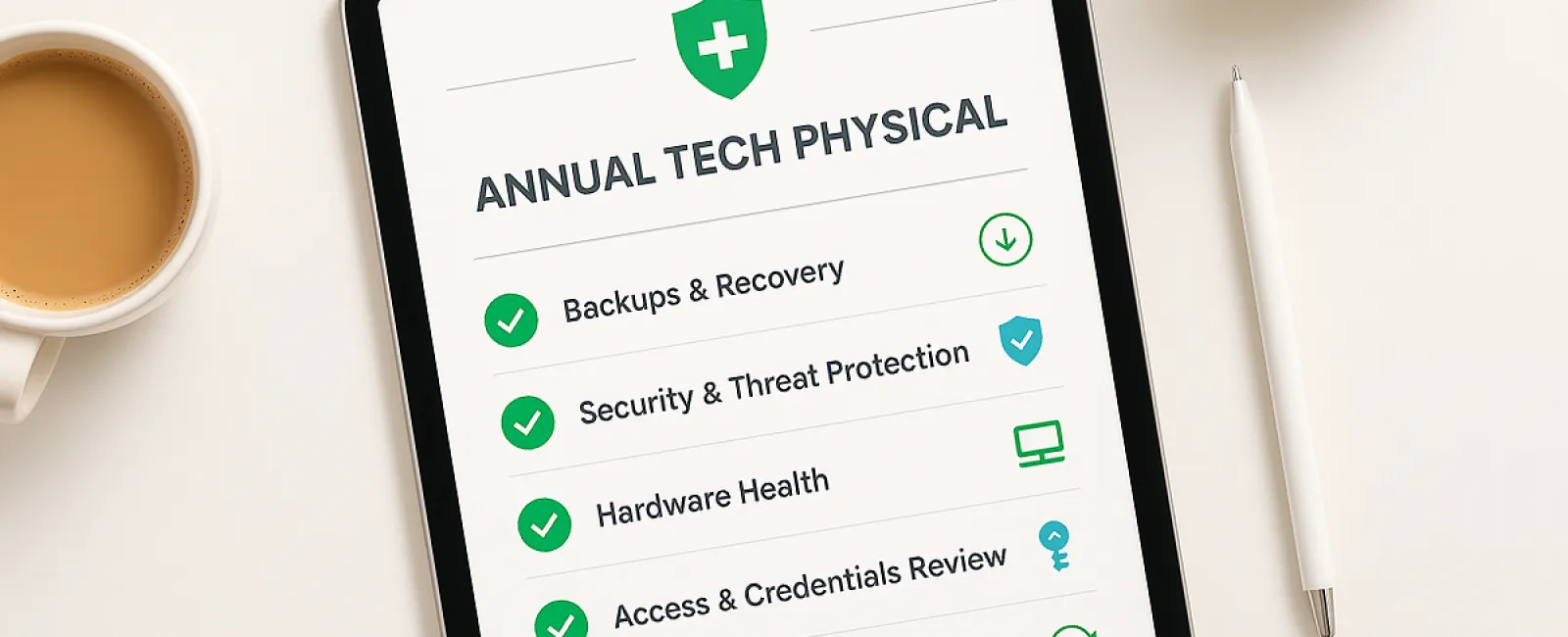
January is the perfect time to finally tackle those neglected appointments and tasks.
Whether it's scheduling doctor visits, dental checkups, or getting that unusual car noise inspected, preventive care is essential.
It might feel tedious, but it's far less stressful than dealing with unexpected crises.
So let's get straight to the point:
When was the last time your business technology underwent a thorough health evaluation?
Not just a quick fix for a broken printer,
but a comprehensive system checkup.
Because operational doesn't always mean healthy.
Beware the "Everything Feels Fine" Illusion
People often skip medical exams because they don't feel unwell.
Similarly, many businesses avoid IT evaluations because:
"Systems seem fine."
"We're too busy right now."
"We'll address issues only when they arise."
But here's the truth about tech issues: they rarely announce their arrival.
Just like high blood pressure can be silent yet dangerous, or tooth decay can develop painlessly until it's critical, technology problems often lurk unnoticed.
Technology behaves in the same hidden way.
Common causes of major tech failures in small businesses include:
- Known threats ignored over time
- Outdated hardware that worked "fine" until it abruptly failed
- Backups that exist but don't properly restore data
- Unused access credentials left unchecked
- Compliance issues overlooked despite regulatory requirements
Your business might operate day-to-day but be one unexpected event away from catastrophe.
Understanding a Comprehensive Technology Health Check
Just like a doctor methodically evaluates your physical health, a professional technology assessment inspects your business systems to uncover unseen vulnerabilities.
Critical Metrics: Backup and Disaster Recovery
Your backup and recovery processes are the lifeblood of your IT health. When everything else fails, can you bounce back quickly?
Consider these key questions:
• Are your backups completing successfully, not just scheduled?
• When was the last time you verified a backup by restoring actual files?
• If your server failed tomorrow morning, how soon could you be back in operation? Do you have an answer?
Many companies only discover their backup failures during a crisis—like finding out your airbags don't deploy when you need them most.
Core Health: Hardware and Infrastructure Status
Technology equipment doesn't politely signal its decline. It gradually ages, loses manufacturer support, slows down, and eventually fails—often at the worst possible moment.
- How old is your essential equipment—servers, firewalls, workstations?
- Are any devices beyond official support, with no security updates or patches available?
- Do you proactively replace hardware, or wait until it breaks unexpectedly?
Aging hardware is a leading, yet often overlooked cause of downtime.
Security Check: Access Controls and Credentials
Who currently has access to your systems? If you hesitate or answer vaguely, it's time for a review.
- Can you list all users with system access?
- Are former employees or out-of-date vendors still active?
- Are there shared accounts that obscure individual actions?
Unchecked access rights often lead to vulnerabilities. It's rarely negligence but the result of not having enough time to maintain proper controls.
Emergency Screening: Disaster Preparedness
While it's uncomfortable to imagine worst-case scenarios, preparing for them is critical.
- If a ransomware attack hit today, would you have a clear, actionable response plan?
- Is this plan documented and regularly tested?
- How long could your business operate without access to its IT systems?
"We'll figure it out as we go" is not a plan—it's hope.
Specialized Compliance: Industry Regulations and Standards
Your industry might require specific compliance standards that define what "healthy" means for your systems, enforced by regulatory bodies.
- Healthcare providers must meet HIPAA standards or face fines up to $50,000 per violation.
- Businesses processing credit cards must adhere to PCI compliance, or risk losing payment processing privileges.
- Security requirements in client contracts are becoming more common and strictly enforced.
Generic IT advice won't suffice—you need experts who deeply understand your industry's unique rules.
Signs That It's Time for a Tech Checkup
If any of these sound familiar, it's past time for a professional review:
"I think our backups might be working." (Uncertainty isn't reassuring.)
"Our server is old, but it's still running." (That's like a car with a failing transmission.)
"We probably have ex-employees still in the system." (Probably is risky.)
"We have a disaster recovery plan… somewhere." (If you can't retrieve it in 30 seconds, it might as well not exist.)
"If [name] leaves, we'd be in trouble." (Single points of failure almost always lead to failures.)
"We'd probably fail an audit, but nobody has asked yet." (Waiting is dangerous.)
The High Price of Neglecting IT Health
A thorough tech checkup takes hours.
Ignoring issues can cost you days, weeks, or even the future of your business.
The consequences add up quickly:
Data Loss: Broken backups combined with server failure could erase invaluable client data, financial records, and projects—damaging beyond repair for some.
Downtime: Every minute offline leads to lost revenue, reduced productivity, missed deadlines, and strained customer trust.
Compliance Fines: HIPAA violations alone can mean $50,000 fines per incident. PCI non-compliance might revoke your ability to accept credit cards, while privacy laws impose increasing penalties.
Ransomware Attacks: Recovery costs for small businesses often reach six figures, factoring in ransom payments, remediation, business interruptions, and reputational harm.
Preventive care might feel dull, but it's far more affordable and less embarrassing than recovery.
Why You Need an Expert Checkup
You don't measure your own blood pressure and declare yourself healthy—you rely on professionals who have the knowledge, tools, and experience to diagnose properly.
Your technology deserves the same level of expertise.
An experienced specialist:
- Understands what healthy IT looks like for businesses your size and sector—not just generic advice but tailored industry standards.
- Has encountered common pitfalls and warning signs typical to companies like yours, knowing which minor issues precede major failures.
- Sees your systems from a fresh perspective, spotting normalized problems you might have overlooked.
This proactive approach means fire prevention instead of rushing to extinguish flames.
Book Your Essential Technology Health Check Today
It's January, the perfect time to schedule all your preventive care—including your business's technology health.
Secure your Annual Tech Physical now.
We'll carefully evaluate your IT environment and provide a clear, jargon-free report highlighting what's functioning well, what risks exist, and which areas need immediate attention to prevent emergencies.
No pressure tactics. Just transparent, practical insights.
Click here or give us a call at 866-523-2985 to book your 15-Minute Discovery Call.
The smartest time to catch a tech problem is before it turns into an emergency.
And that time is right now.